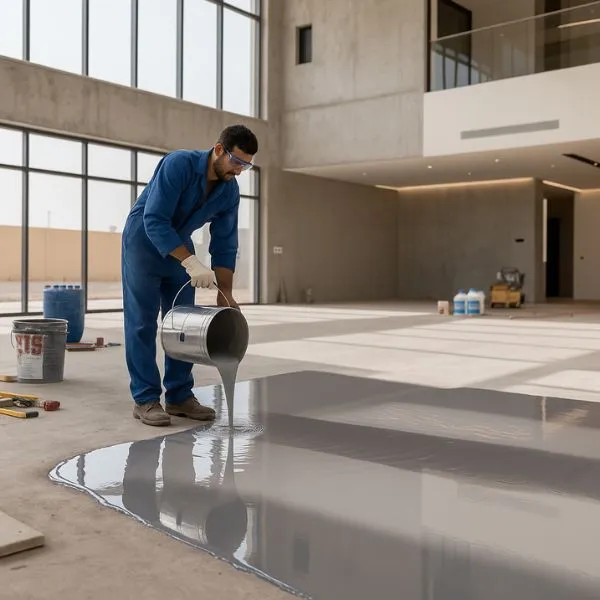
Commercial concrete floors often carry decades of hidden history. Old coatings may have been removed, cracks repaired multiple times, machinery relocated, chemicals spilled, and previous patches installed with different materials. By the time a facility plans another flooring upgrade, the slab may contain clues that are not visible during a quick inspection. Understanding this history can help facility managers avoid repeating earlier failures and choose a resinous flooring system based on actual substrate conditions rather than assumptions.
Previous Coatings Reveal Useful Information
An older coating can show where the floor has experienced the greatest stress. Worn forklift lanes, peeling sections, chemical stains, and repeated patches often correspond with specific operating conditions. Instead of viewing the existing surface only as material that needs removal, managers can use it as evidence. Areas that failed earlier may point to moisture, contamination, heavy traffic, poor preparation, or incompatible materials.
Photographs and maintenance records can also help determine whether the same locations have been repaired repeatedly.
Old Repairs Should Be Evaluated
Concrete floors may contain patches installed years apart using different repair products and methods. Some remain firmly bonded, while others begin separating or cracking around their edges.
When comparing Local Epoxy Floor Contractors Nj, facility managers should ask how previous repairs will be assessed once the existing surface is prepared. Weak patches may need removal, while sound repairs might remain depending on their condition and compatibility with the new system. Ignoring unstable repair material can carry old weaknesses into the new installation.
Equipment Relocation Can Expose Hidden Damage
Manufacturing machines, storage racks, refrigerators, workstations, and other fixed equipment can conceal concrete for years. When these items are moved during renovation, previously hidden sections may reveal oil staining, cracks, anchor holes, or older coating systems.
These areas should not automatically receive the same treatment as already exposed concrete. They may require additional cleaning, mechanical preparation, or repair.
A complete assessment becomes easier when managers coordinate equipment movement before final flooring preparation begins.
Contamination Can Remain Below the Surface
Industrial and commercial slabs may have been exposed to oils, grease, coolants, food residues, detergents, or process chemicals over many years.
Even when the visible surface looks clean, contaminants may have penetrated porous or previously unprotected concrete. This can affect adhesion if the substrate is not prepared appropriately.
Mechanical grinding or shot blasting can remove weak material and old coatings while revealing areas that need closer evaluation. Surface preparation should be selected according to slab condition rather than used as a simple checklist step.
Repeated Failures Deserve Investigation
If several coating systems have failed in the same location, applying another one without investigating the pattern is unlikely to be a strong long-term strategy.
Facilities comparing the best epoxy floor contractors should ask how recurring failures will be diagnosed. Moisture conditions, concrete movement, chemical exposure, impact, or inadequate prior preparation may all contribute.
The purpose of the assessment is not simply to identify what material failed, but to understand why the location continues to develop problems.
Floor History Can Influence System Design
A facility’s use may have changed substantially since the previous coating was installed. A warehouse may now handle heavier forklifts, a production area may use different chemicals, or a food-service operation may have introduced more aggressive sanitation procedures.
The replacement flooring system should reflect current and expected future conditions rather than automatically duplicate the old specification.
Managers should provide contractors with information about traffic, equipment, cleaning, spills, and any planned operational changes that may affect the floor.
Documentation Helps Future Maintenance
Once the new installation is complete, managers should begin creating a clearer history for the next maintenance cycle.
Records can include photographs of repaired areas, coating-system information, joint locations, preparation notes, and dates of localized repairs. If deterioration appears later, this documentation helps determine whether a defect is new or connected to a previous substrate condition.
Consistent records can also reveal patterns across high-traffic or chemical-exposure zones.
Inspection Should Continue After Reopening
The first months after installation provide useful information about how the new floor responds to normal operations. Maintenance teams should pay attention to previously problematic locations, including repaired cracks, old equipment zones, joints, drains, and heavily travelled routes. Any unusual changes should be documented early.
Prompt inspection does not mean expecting failure. It simply creates a baseline that makes future condition changes easier to recognize.
Conclusion
Every commercial concrete floor has a history, and that history can influence the success of its next coating system. Previous repairs, hidden contamination, old coating failures, equipment locations, and changing operational demands all provide useful information during renovation planning.
Rather than treating the slab as a blank surface, facility managers can use these clues to guide preparation and system selection. Careful investigation, mechanical preparation, repair evaluation, and maintenance documentation can reduce the risk of repeating past problems and help create a flooring strategy based on what the concrete has actually experienced.