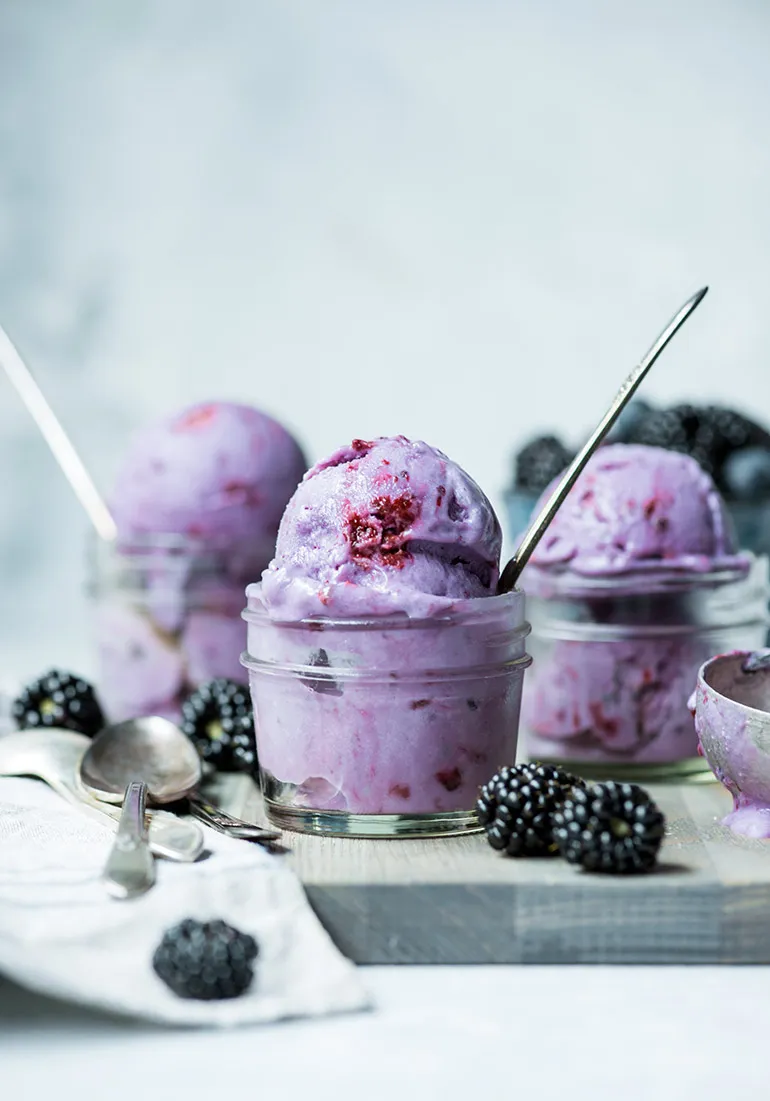
A berry-style frozen dessert has several color challenges at once. The fruit swirl may be acidic, the base may be opaque, and the finished product spends most of its life at low temperature. An Elderberry Color can work well in strongly acidic fruit systems, but it should be tested where it will actually be used. FoodRGB lists black elderberry for fruit preparations, frozen beverages, confectionery, juice, and related applications, making it a useful option for red-to-purple components that sit beside dairy or plant-based frozen bases.
Acidity Shapes Elderberry
FoodRGB describes black elderberry extract as water-soluble and available in 5% and 10% powder forms. Its preferred pH range is about 2.5 to 4.5, where the shade can move from vibrant red toward warm purple. That range can fit berry sauces, acidic ribbons, and fruit preparations used in frozen products. Developers should measure the finished fruit component after acids, flavors, and sweeteners are present. A simple water sample cannot show how the color will look once fruit solids and the full flavor system are involved.
The Frozen Base Can Soften Color
A fruit ribbon may look intense on its own and noticeably softer once it is folded through ice cream or another opaque frozen base. Milk solids, plant proteins, fat, stabilizers, and incorporated air change the way light reaches the pigment. That does not always mean more color is needed. It is better to compare the swirl by itself and then inside the finished dessert. Testing both views helps developers choose a concentration that still reads clearly without making the fruit component look unnaturally dark before it is combined.
Purple Sweet Potato Offers Another Route
For acidic red-to-purple applications, Sweet Potato Concentrate gives developers another option to compare. FoodRGB identifies anthocyanin as the pigment in its purple sweet potato color and lists strong performance around pH 2.0 to 4.0. The color is water-soluble and available in several powder and liquid strengths, along with custom formulations. FoodRGB also lists ice cream, frozen foods, fruit preparations, jelly, and confectionery among its applications. That makes purple sweet potato useful when a frozen product needs a berry-like shade with reliable acid compatibility overall.
Heat Before Freezing Still Matters
Frozen products are not always processed cold from start to finish. Fruit preparations may be cooked, pasteurized, or hot filled before they are chilled and added to the dessert. FoodRGB describes purple sweet potato as heat stable in its preferred acidic range, while black elderberry is described more cautiously as heat resistant rather than fully heat stable. That difference should be tested in the actual process. Developers can compare the shade before heating, after cooling, and again after freezing to see which system handles production more comfortably.
Swirls Need Even Distribution
A colored fruit swirl has to remain distinct without becoming streaky or disappearing into the surrounding base. Viscosity, fruit solids and the point where color is added can all affect distribution. If the ribbon is uneven, more pigment may just create darker spots instead of correcting the mixing problem. Pre-dispersion, timing and concentration of addition can be assessed on a small scale prior to build-up. The goal is a fruit component that looks consistent on its own and still shows a clear red or purple contrast once it is layered or folded into dessert.
Cold Storage Finishes the Test
Freezing slows many changes, but it does not remove the need for shelf testing. Color should be checked after hardening, during frozen storage, and after normal temperature fluctuations that may occur in distribution. Packaging matters too because clear tubs and display windows expose products differently from opaque cartons. Developers should keep pilot samples in the intended pack and review them at planned intervals. A shade that stays attractive through frozen shelf life is more valuable than one that only looks strong on the day the product is made.
Conclusion
Berry-style frozen products are easier to color when each component is treated according to its own formula. Black elderberry can suit strongly acidic fruit systems, while purple sweet potato offers another red-to-purple route with good performance in acidic applications. Manufacturers can use foodrgb.com to review both color systems and application support for frozen foods, fruit preparations, and related products. Testing pH, heating, mixing, freezing, and storage together gives development teams a stronger basis for choosing a shade that remains clear, balanced, and practical through commercial production.