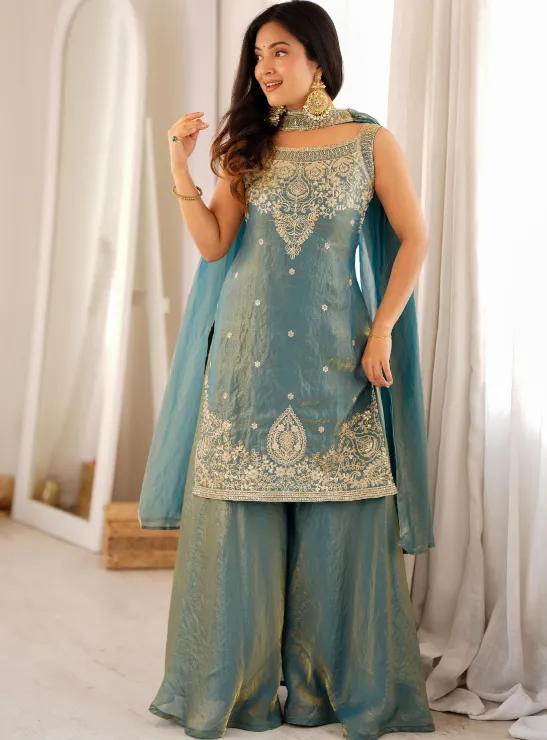
A noon engagement calls for festive clothes that remain comfortable through lunch. A sharara suit for women offers a different shape from a lehenga: the fullness comes from two separate trouser legs beneath the kurta. That construction affects how you sit, walk and arrange the dupatta. If orange appeals to you, consider whether you prefer a rust shade, a bright marigold tone or a mix of orange with maroon. The goal is to choose the version that fits the gathering, not simply the boldest photograph.
Notice Where the Flare Starts
A sharara generally widens dramatically below the fitted upper part of each leg, though the exact cut varies by design. Some are shaped with a seam near the knee, while others create their flare more gradually. Compare a full-length front photograph with a side view before deciding. In a seated engagement portrait, the trousers will gather around your knees differently from a skirt. Try the garment sitting in a chair and on a cushion if both arrangements are likely at the venue.
Try Orange With Maroon Details
A maroon and orange georgette sharara design with zari embroidery and sequins shows how two warm colours can share an outfit. Its matching orange trousers and decorated dupatta keep the palette coordinated. Another orange Chinon design combines red and orange tones with thread, sequin and pearl work. Look closely at the neckline and cuffs rather than selecting solely from the skirt image. Those details will stay visible when relatives gather close around the engaged couple for photographs. The colour contrast is part of the design.
Compare Colour Without Assuming Contents
An Orange Sharara Suit search may lead to a wider orange suits collection, so check whether the selected item is actually a sharara rather than an Anarkali or palazzo set. A bright orange top with straight trousers creates a different outline from a short kurta over flared sharara legs. Verify the included bottom and dupatta before paying. Collection headings can help you browse colour, but they do not replace the individual product description or the size information for the garment you intend to wear.
Keep the Dupatta Near Shoulders
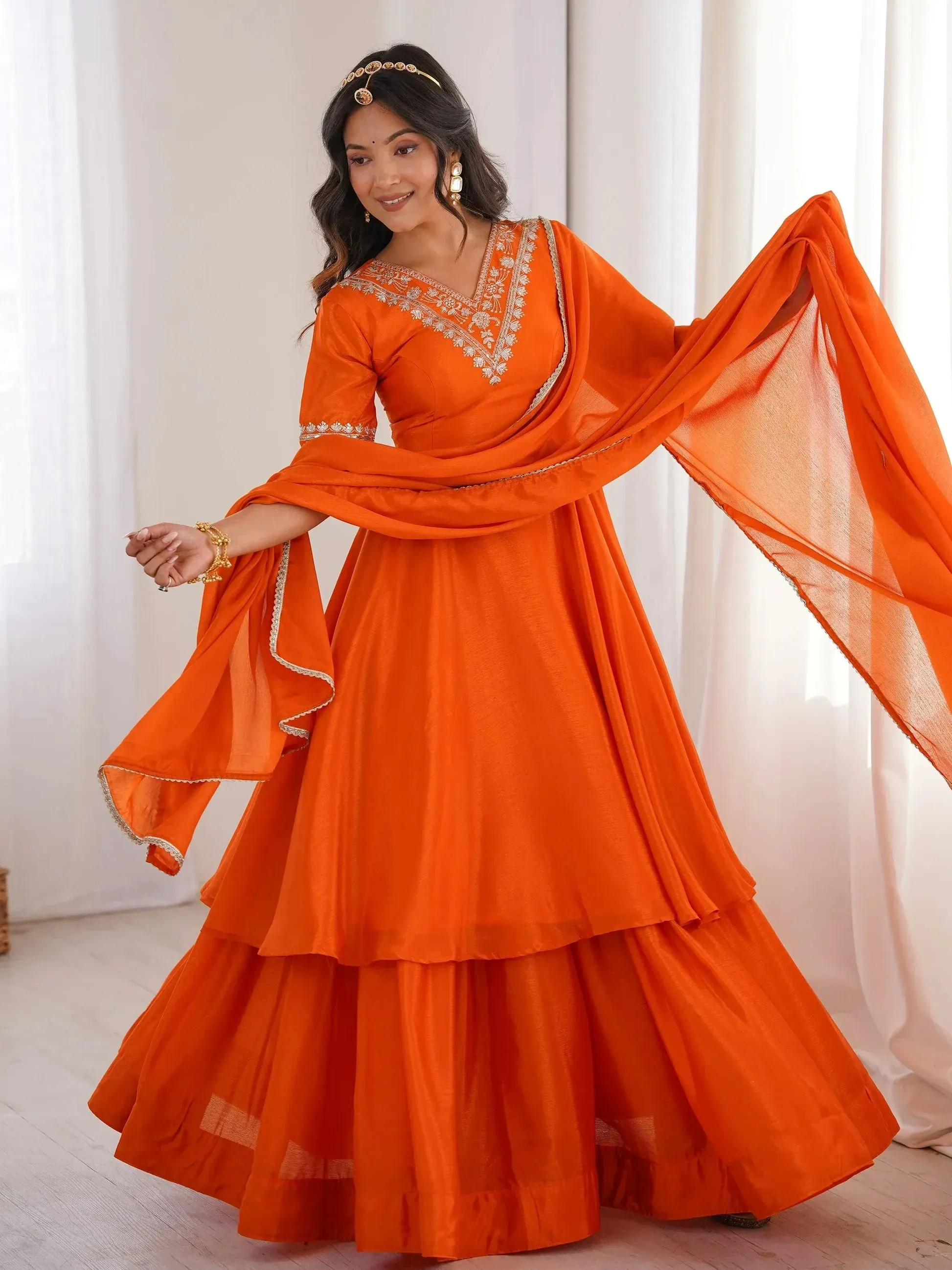
For an afternoon gathering, you may move from greetings to a ring exchange and then lunch without a formal outfit change. A dupatta folded over one shoulder leaves the hands free while keeping embroidery visible beside the neckline. Try extending both arms as though passing a gift, then sit and rise. If the loose end slides forward each time, shorten it or secure the folds at a strong seam. Make sure any pin stays clear of bare skin and delicate decorative threads.
Match Footwear to Trouser Length
Wide trousers can hide most of the shoes while you stand, then reveal them when you sit. Check the actual bottom length in the footwear you plan to wear, not just the model’s photograph. If the hem catches on the toe during a step, have it adjusted without damaging embroidery near the edge. Choose accessories that stay comfortable through lunch and a walk around the venue. A small preparation list can keep the final fitting focused rather than turning it into another shopping session.
-
Sharara waist and leg length
-
Kurta sleeve comfort
-
Dupatta border clearance
-
Shoes tested while seated
-
One small accessories pouch
Let the Engagement Stay Informal
Not every engagement requires a heavily decorated outfit. If the gathering is at home, look at the floor space around chairs and tables before choosing a very broad flare. A simple set with one embroidered feature can be as appropriate as an elaborate design, depending on the family’s plans. Ask about any colour expectations instead of assuming orange is always preferred. Once you are comfortable sitting and moving in the complete outfit, let its cheerful colour contribute naturally to the afternoon.
Conclusion
The loveliest engagement photographs are often the ones taken after the formal pose, when someone laughs or turns to greet a relative. Choose an orange tone and garment shape that allow those ordinary movements. Confirm whether the trousers are truly flared, test the dupatta with the kurta and keep the shoes at a workable height. Then step away from the mirror. The gathering is about two people and their families coming together; your clothes should help you take part without needing constant attention.